March 2026 Nottinghamshire Heritage Events
- Posted in:
- GetInvolved
With the warm weather and slightly longer days brings a new selection of heritage events happening across Nottinghamshire. Here are just a few for you:
Monday 2nd March: Head to Hucknall Library ‘for a free small group session to explore Inspire’s Heritage photograph collections. Discover more about the Inspire Picture Archive which holds over 40,000 images of Nottinghamshire life from the 19th century up to the present day’. You will also learn how to upload your own photographs to add to Inspire’s catalogue and how Inspire manage their physical photograph collection. Book your place for free here.
Monday 2nd March: ‘Join Professor Tom Higham online to discover the latest scientific methods and breakthroughs in Neanderthal extinction and human dispersals’. ‘In this lecture [he] will talk about the latest data, both from the field and the laboratory, and explore the disappearance of the Neanderthals and the dispersal of ‘modern humans’ into Eurasia. [He] will outline some of the new biomolecular tools we are now using to find fragmentary human bones, which can then be genetically sequenced and dated, and what these have told us about this period of human prehistory’. Book your free place here.
Saturday 14th March: Also at Hucknall library is a new event to celebrate the project: ‘Hucknall, Skegby, and Selston: Then and Now’. ‘Come along and discover how Hucknall, Skegby and Selston have changed over time’ and ‘and explore Hucknall Library’s heritage resources including the new Nottinghamshire Digital Archive platform’. The ‘project artist, Edwina Kung will also be running a fun, interactive artist workshop for families, during the celebration event’. This event is free and no booking is required, just drop in! For more information, visit the event page here.
Sunday 15th March: ‘Treat your mum to a Mothers Day experience like no other – a walk in Sherwood Forest with Robin Hood’. ‘This walk is around 90 minutes and will be packed with some of Robin’s favourite tales of the outlaws and motherly figures from history’. Tickets cost up to £11 per person and booking is required. Book your place here.
Tuesday 17th March: At Mansfield Central Library, ‘join historian David Templeman for an in-depth talk on the interaction between the three most colourful and charismatic women in Elizabethan History’ (Elizabeth I, Mary, Queen of Scots and Bess of Hardwick). ‘David’s talk will offer a new perspective on these women and a unique insight into a predominantly man’s world entered into and conquered by these three powerful icons’. Tickets cost £3 and booking is required. Book your place here.
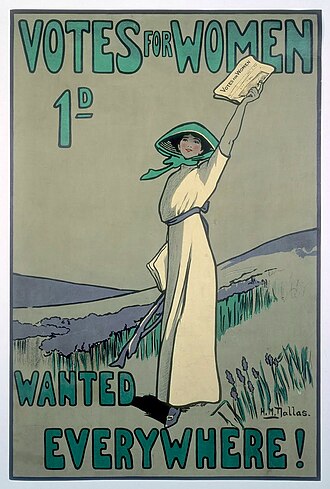
Above: Votes For Women Poster, 1909. (By Hilda Dallas - Private collection, Public Domain)
Wednesday 18th March: Head to Beeston Library for the ‘Heritage Talk: Deeds Not Words’. ‘The Suffragette movement revolutionised how women were viewed, and what they could achieve. The Nottingham area certainly had it’s share of these courageous women. Come and find out about who these remarkable women were, as local historian Sandra Berrington uncovers the efforts and sacrifices they made to give women equality’. Tickets cost £3 and booking is required. Book your place here.
Wednesday 18th March: ‘Step back in time and join Reverend John T. Becher, founder of The Workhouse, on a tour of Southwell. Follow Becher on an historical 2.5 mile walking tour of Southwell as he highlights his connections with the town as a churchman, magistrate and social reformer during a period of great change’. This event is free but booking is recommended. Book your place here.
Friday 27th March: In association with the National Civil War Centre, join archaeologist Richard Parker to find out more about the Norton Disney Dodecahedron. ‘This fine example of a Gallo Roman dodecahedron was found in the summer of 2023 when archaeologists excavated a Roman site at Norton Disney, close to a Roman villa and the Fosse Way Roman road. Its purpose remains a mystery’. This evening event, at the Palace Theatre, costs up to £10 per person and booking is required. Book your place here.
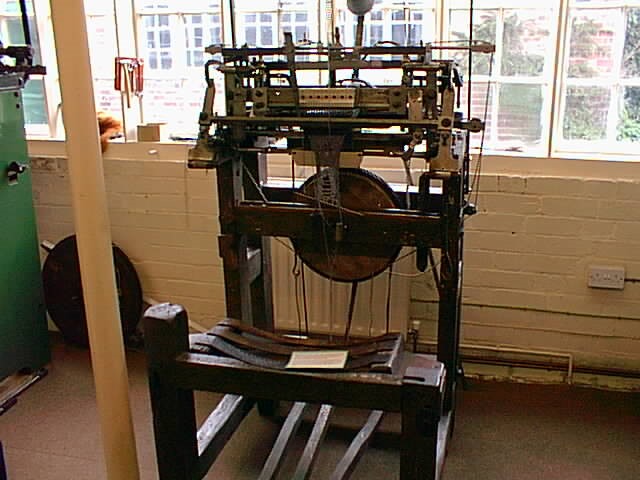
Friday 27th and Saturday 28th March: ‘As part of its new events programme, the Framework Knitters Museum is presenting the world premiere of ‘Riot Act’, a play originally commissioned by Nottingham Playhouse, by renowned Nottingham writer Andy Barrett. ‘Riot Act’ explores the lives of the Nottinghamshire framework knitters and the rise and fall of the Luddite movement at the start of the nineteenth century’. Tickets cost £5 per person and booking is required. Book your place here.